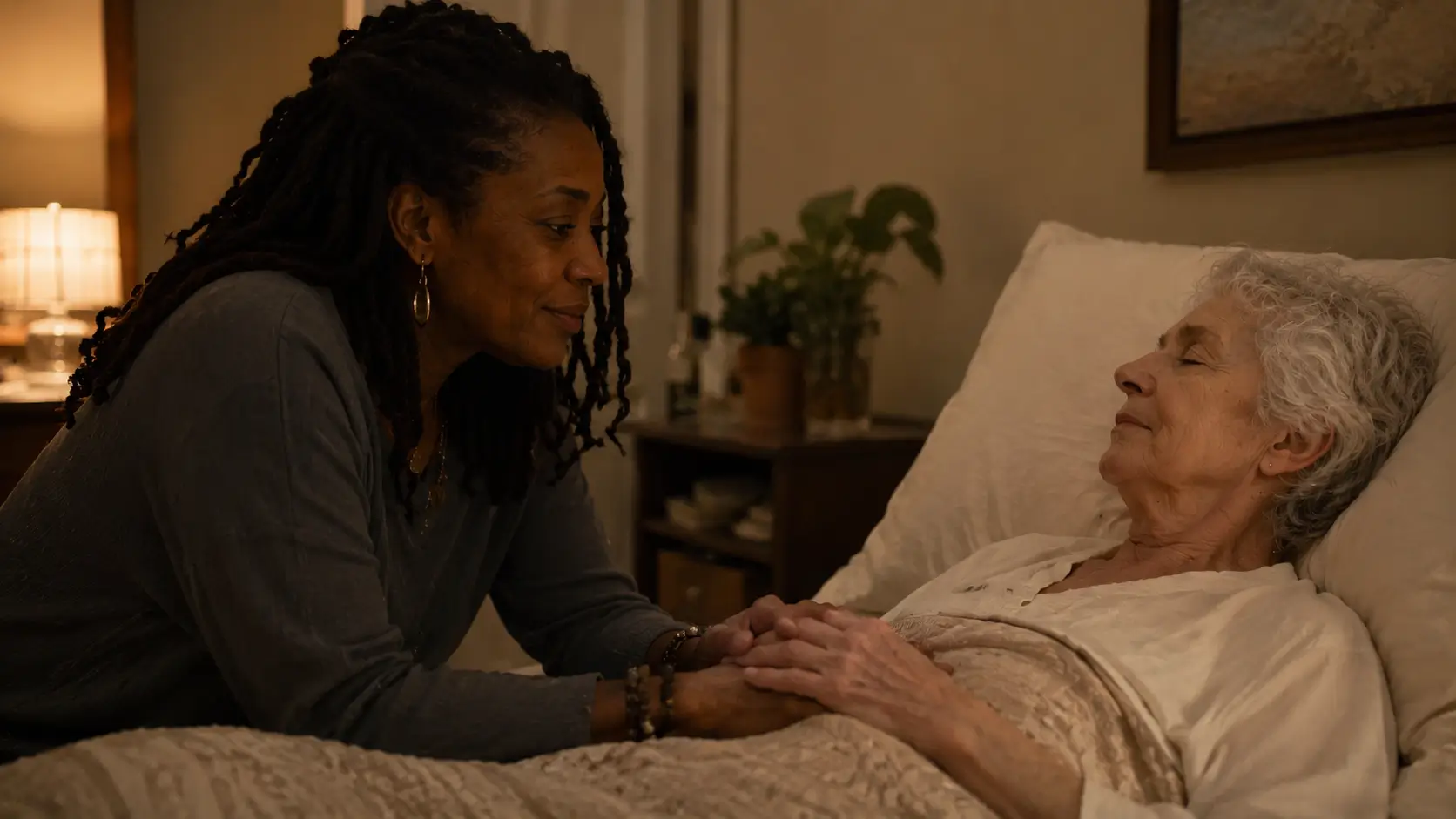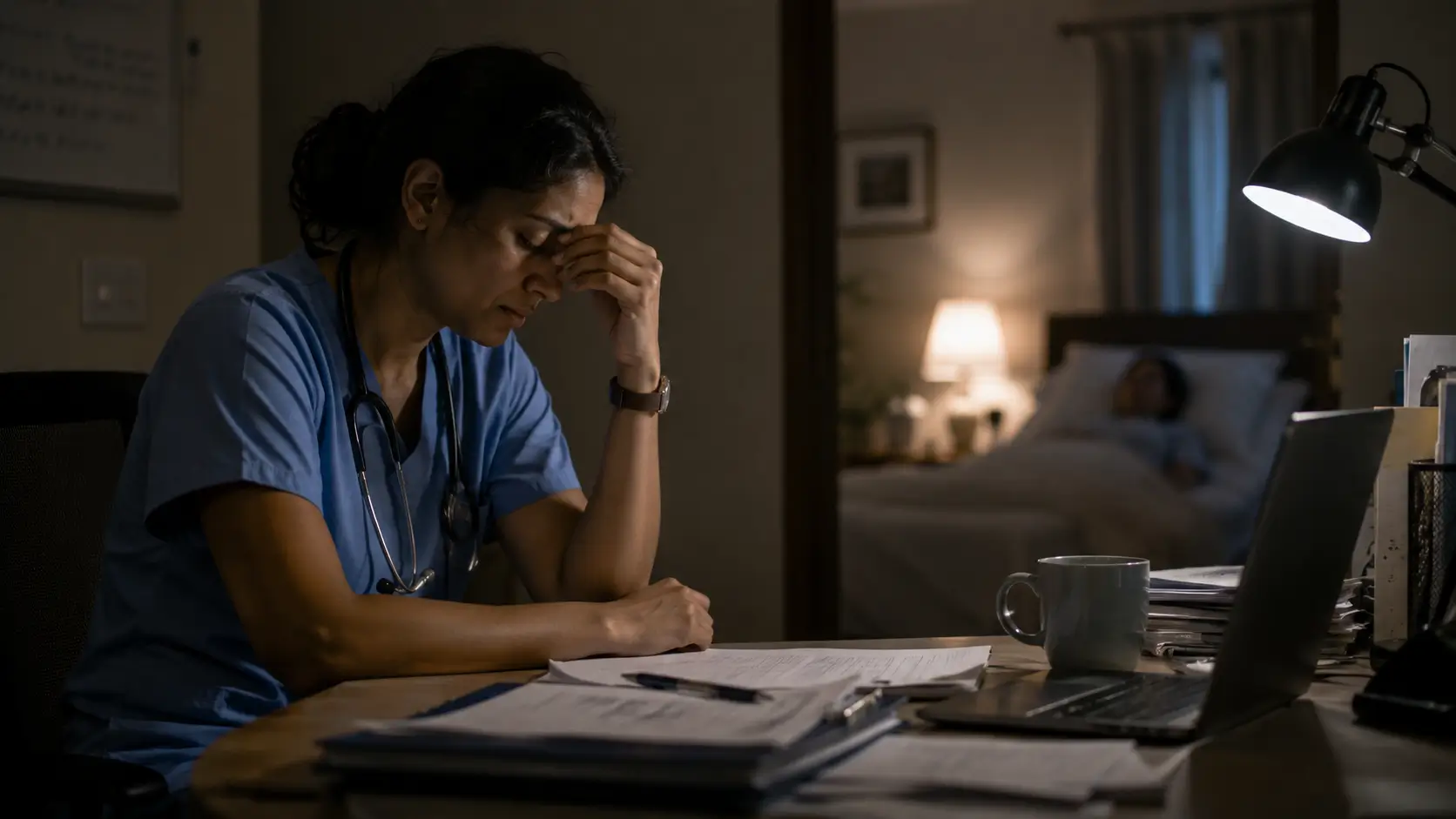
Every summer, a new class of medical students puts on a short white coat for the first time and walks onto a hospital floor. Elsewhere, third-year students begin their first clinical clerkships, and new residents are several weeks into carrying responsibility that no longer ends when a lecture, examination, or scheduled exercise is over.
They will be taught multiple approaches to the art, science, and practice of medicine. They will learn how to take histories, perform examinations, construct differential diagnoses, interpret tests, develop treatment plans, communicate with patients, and increasingly use sophisticated technologies to support their work. What many will have much less opportunity to understand is what the encounter feels like from the other side of the examination table. Unless they have already been patients themselves, they may have little appreciation for how uncertainty, waiting, fragmented communication, unexplained reasoning, an unclear or unusable treatment plan can feel once the clinician has left the room.
No one handed me a single method that brought those two perspectives together. I did not set out to create one, either. Over the past year, I have written about what initially looked like separate problems in medicine: why patients can feel gaslit when no clinician intended harm; why a technically appropriate visit can still feel unfinished; why reassurance without explanation may not reassure; why “Call if it gets worse” is not an adequate instruction; why a medically sound treatment plan can still fail in a patient’s actual life; why trust is not restored by empathy alone; why care fragments between clinicians and between visits; and, most recently, why artificial intelligence can make an incomplete encounter appear complete.
For much of that time, I thought I was examining different problems. Gradually, I realized that they were different manifestations of the same underlying issue. The clinical method had become compressed, with important parts of that method often receiving too little attention or, at times, no meaningful attention at all.
I now call the method the Care-Full Clinical Sequence:
Listening → Examination → Differential diagnosis → Shared and understandable reasoning → Treatment planning → Feasibility and treatment burden → Follow-through
None of these elements is radical. Most are recognizable from how generations of clinicians have been trained to practice medicine. The problem is that each can now be documented as having occurred without necessarily accomplishing what it was intended to accomplish.
Listening is where my work on medical gaslighting began. Patients do not usually feel dismissed because a clinician lacks compassion. More often, the patient’s story has not been heard completely enough for its meaning to become clear. A symptom may be acknowledged but not fully explored, and reassurance may arrive before the patient understands why reassurance is clinically appropriate. What the clinician experiences as reasonable clinical narrowing may be experienced by the patient as disbelief or minimization.
Listening is therefore not simply an interpersonal skill. It is a clinical discipline that helps the clinician understand the history accurately enough to begin honing in on an appropriate differential diagnosis.
Examination and differential diagnosis extend that process. A patient may receive an appropriate examination, normal laboratory results, and a reasonable conservative plan and still leave without understanding what was considered, what has been reasonably excluded, and what remains possible. The medical record may appropriately document the encounter, yet the patient may still have no usable understanding of where the clinical reasoning stands. That is the state I came to call unfinishedness: administrative closure before clinical completion. The visit may have ended, but the patient’s clinical uncertainty has not necessarily been resolved or adequately defined.
Shared and understandable reasoning is what prevents the clinician’s thinking from remaining implicit. Patients do not need to become diagnosticians, but they do need enough of the reasoning to understand how the clinician is interpreting what is happening and what remains uncertain.
That reasoning can often be made visible through five questions:
- What is most likely?
- What has been reasonably excluded?
- What remains possible?
- What would change the treatment plan?
- Who is responsible for what happens next?
These became the Five Disciplines of Care-Full Language because they translate clinical reasoning into something the patient can understand, remember, and use after the encounter ends. A conclusion entered into the medical record is information. Reasoning that becomes understandable and usable to the patient is part of actual care.
Treatment planning must likewise do more than identify what should be done. “Call if things get worse” sounds like guidance, but unless “worse” has been defined by thresholds, the patient is being asked to make a clinical judgment without the framework needed to make it safely. Worse in what way? Over what period of time? What changes are expected? Which changes should prompt reassessment? Who should the patient contact, and what should happen when that contact occurs? A treatment plan becomes clinically useful when those thresholds and responsibilities are sufficiently clear to guide what happens after the visit.
Then comes a part of care that medicine acknowledges but does not always incorporate explicitly enough into the clinical sequence: feasibility and treatment burden. A treatment plan can be medically appropriate and still be difficult or impossible to carry out. The medication may not be affordable. Transportation may not be available. Instructions from several specialists may not be interconnected or may unintentionally interfere with one another. The demands of treatment may exceed the patient’s physical capacity, health literacy, family support, finances, time, or emotional bandwidth.
A plan that works in the medical record but not in the patient’s actual life is not yet a complete plan. Feasibility is not an accommodation added after the clinical decision has been made. It is part of determining whether the clinical decision can actually become effective care.
And then comes follow-through, the stage that modern health care can lose particularly easily because responsibility is increasingly distributed across clinicians, portals, test results, consultants, handoffs, inboxes, urgent care settings, and after-hours coverage. This is where another concept became important to me: Medicine operates on two clocks.
Administrative time governs appointments, office hours, message queues, staffing, referrals, result reporting, and handoffs. Biological time governs symptoms, treatment effects, recovery, deterioration, and uncertainty. The clinic may close at 5, but illness does not.
Follow-through means accounting for both clocks. When can improvement reasonably be anticipated? How long is conservative care, watchful waiting, or monitoring appropriate? What change would cause the differential diagnosis to be reconsidered or modified? Who will interpret a pending result, and when should that interpretation occur? Who has responsibility for the next clinical decision and for making any necessary changes to the treatment plan? The goal is not continuous clinician availability. It is continuous clinical direction.
Artificial intelligence has now entered every stage of this sequence. It can help patients organize histories, help clinicians search and synthesize information, support differential diagnosis, reduce documentation burden, and identify omissions. Used well, it can strengthen clinical work.
But fluent output is not the same as clinical understanding. An elegant summary can still begin with an incomplete history. A plausible recommendation can still narrow the differential diagnosis too early. A polished note can make unfinished care appear complete.
That is why I have come to a simple principle: Actual Intelligence before Artificial Intelligence.
By Actual Intelligence, I mean the clinician’s trained capacity to listen, observe, examine, reason, tolerate uncertainty, exercise judgment, assess feasibility, and remain responsible for what happens next. That intelligence should establish the clinical frame before technology amplifies it. If the method is incomplete, AI can amplify the incompleteness. If the method is Care-Full, AI can strengthen it.
I did not learn this sequence all at once. I learned pieces of it over more than fifty years as a surgeon, medical educator, clinical leader, consultant, and someone who helped develop clinical guidelines that later became part of modern health care infrastructure. Eventually, I also learned it from the other side of the encounter.
After extensive spinal surgery, persistent and worsening symptoms were repeatedly minimized before imaging revealed structural hardware failure and loss of fusion. Revision surgery, prolonged immobilization, rehabilitation, and lasting consequences followed. What stayed with me was not simply that something had gone wrong. It was that I understood medicine, knew the health care system, and still experienced what it meant for a clinical encounter to end before the patient’s story had been adequately reconsidered.
Years later, while writing about medical gaslighting, I recognized that I was describing something that had happened to me. That recognition began a thought process that eventually led to a deeper understanding of some of the root causes that have negatively affected medicine today, and to a larger question: How can we restore understanding, trust, and meaning to the clinical encounter without asking already burdened clinicians simply to do more?
The students entering medicine this summer will learn more science than my generation could have imagined. They will practice with technologies we could not have conceived. Their diagnostic tools will become more efficient, more sophisticated, and increasingly more intelligent. Yet the central obligations of the clinical encounter remain remarkably familiar. Hear the patient’s story before narrowing it. Examine the patient, not merely the data. Maintain the differential diagnosis open long enough to focus on what does not fit. Make the clinical reasoning visible and understandable. Build a treatment plan the patient knows how to use. Test that plan against the patient’s actual life. And make clear who is responsible for what happens next.
That is the Care-Full Clinical Sequence. It is not a reinvention of medicine. It is a restoration of something medicine has always known, but modern practice has made increasingly difficult to hold together.
If I could hand one method to the student putting on a white coat for the first time, or to the resident answering a pager in the middle of the night, it would be this: Do not mistake the end of the encounter for the completion of care.
Medicine runs on two clocks. Administrative time tells us when the visit ends. Biological time tells us whether the care is finished. The work of Care-Full Medicine is to keep those clocks aligned closely enough that patients are not left to navigate the space between them alone.
Because the best medicine does not happen to patients. It happens with them.
Alan P. Feren is a retired surgeon, independent physician, health care consultant, and patient advocate with more than 50 years of experience in clinical practice, system leadership, and health care innovation. Formerly in academic and community surgical practice, he has worked across the evolving landscape of managed care and clinical governance.
In the 1990s, Dr. Feren co-authored clinical guidelines that evolved into what is now MCG Health, now used by more than 80 percent of U.S. health plans and over 3,100 hospitals. He has advised health technology startups, helped shape managed care policy, and served as a clinical content developer for health care technology platforms.
His work centers on restoring shared understanding between clinicians and patients in an era defined by speed, fragmentation, and technological mediation. Drawing on both professional experience and his own journey as a complex patient, he writes about transparency, accountability, and the disciplined methods that make medical care trustworthy. He is a contributor to KevinMD and a podcast guest. More information is available at mypersonaladvocate.net and on LinkedIn.
Reference: Posted in KevinMD.com 2026, Available at: https://kevinmd.com/2026/08/explaining-clinical-reasoning-to-patients-in-five-questions.html (Accessed: 21 August, 2026)